Introduction
Understanding website performance and visibility requires the right tools for analytics and optimization. For beginners, SEO tools simplify keyword research and tracking, while advanced users can perform audits to improve rankings. Effective tools help identify opportunities, analyze competitors, and refine content strategies, boosting organic traffic and long-term search engine performance.
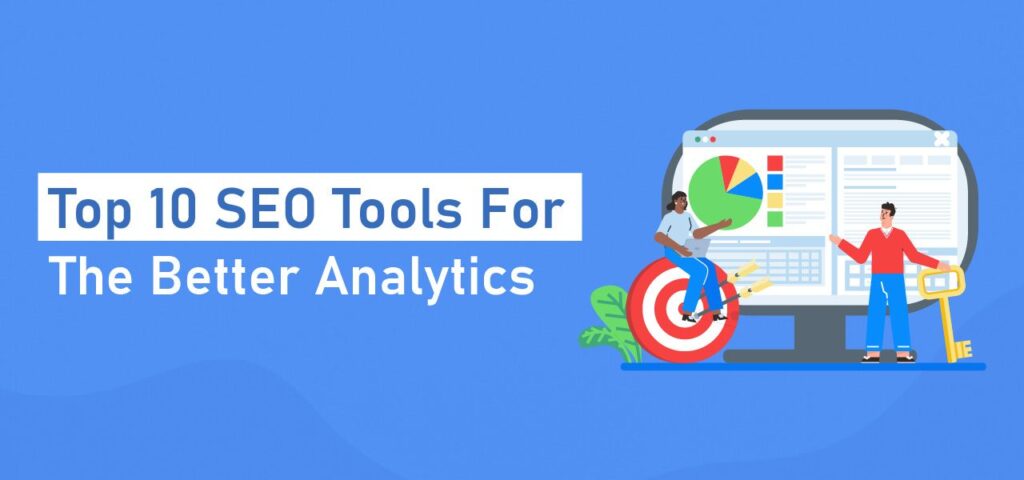
Top 10 SEO Tools for Powerful Website Analytics

1. Google Analytics
Google Analytics tracks website traffic, user behavior, and conversion data. It provides detailed insights for content optimization, audience understanding, and SEO campaign performance. Real-time reporting helps marketers make informed decisions, measure engagement, and refine strategies to improve organic search visibility, user retention, and overall website growth.
2. Google Search Console
Google Search Console monitors indexing, search performance, and keyword rankings. It detects crawl errors, mobile usability issues, and page experience problems. Marketers can submit sitemaps, monitor backlinks, and understand how Google views their site. This ensures proper SEO implementation and helps improve visibility, traffic, and site authority over time.
3. SEMrush
SEMrush offers keyword research, competitor analysis, backlink tracking, and site audits. Marketers can discover ranking opportunities, optimize content, and identify gaps in their strategy. Its reporting and analytics tools provide actionable insights to improve organic search performance, measure ROI, and boost traffic through data-driven SEO planning.
4. Ahrefs
Ahrefs provides backlink analysis, keyword exploration, and competitive insights. It tracks referring domains, content performance, and link quality. Site audits reveal technical issues, helping optimize for search engines. By using Ahrefs, marketers can strengthen SEO campaigns, enhance authority, and attract higher organic traffic consistently over time.
5. Moz Pro
Moz Pro offers keyword tracking, link analysis, and site auditing. Its Domain Authority metric helps gauge website authority and ranking potential. With Moz Pro, marketers can identify opportunities, optimize on-page content, track competitors, and implement strategies that improve search visibility, strengthen SEO health, and maintain consistent organic growth.
6. Screaming Frog SEO Spider
Screaming Frog crawls websites to detect broken links, duplicate content, redirects, and metadata gaps. It provides a complete overview of technical SEO issues affecting search performance. By fixing these problems, marketers can ensure proper indexing, improve user experience, and enhance search engine rankings for better organic traffic and site health.
7. Ubersuggest
Ubersuggest provides keyword ideas, competitor insights, and content suggestions. It helps marketers identify trending topics, analyze ranking difficulty, and estimate traffic potential. With its simple interface, users can optimize content, track SEO performance, and implement effective strategies to increase organic search visibility and website engagement.
8. Hotjar
Hotjar visualizes user behavior using heatmaps, session recordings, and engagement analytics. It helps understand how visitors interact with a website, highlighting usability issues and areas for improvement. By analyzing user intent, marketers can optimize page layout, enhance content clarity, and improve conversions while supporting overall SEO performance.
9. Yoast SEO
Yoast SEO analyzes on-page optimization for WordPress sites, including readability, keyword placement, and meta descriptions. It provides actionable recommendations to improve content structure and SEO consistency. By following Yoast’s guidance, marketers can enhance user experience, boost rankings, and maintain effective content optimization practices over time.
10. Majestic
Majestic specializes in backlink analysis and link authority evaluation. It provides metrics like Trust Flow and Citation Flow to assess link quality. Marketers can analyze competitor link profiles, identify authoritative backlinks, and strengthen domain authority. This supports long-term SEO strategy and helps improve organic rankings sustainably.
10 Important Benefits of Using SEO Tools
1. Improved Keyword Targeting
SEO tools identify high-value keywords, search trends, and ranking opportunities. They guide content creation to align with user intent, improve relevance, and increase search engine visibility, ensuring the website attracts the right audience consistently.
2. Enhanced Website Performance
By detecting technical issues, SEO tools help optimize site speed, structure, and mobile usability. Improving these elements enhances user experience, reduces bounce rates, and positively impacts search engine rankings and overall website performance.
3. Competitive Insights
SEO tools analyze competitors’ strategies, backlinks, and keyword rankings. Understanding the competitive landscape enables marketers to adjust tactics, uncover opportunities, and outperform rivals in search visibility and content authority.
4. Better Content Optimization
These tools provide insights on keyword usage, readability, and structure. Marketers can create relevant, high-quality, search-friendly content that engages users and ranks well on search engines.
5. Stronger Backlink Profiles
SEO tools evaluate link quality and sources. Marketers can identify authoritative sites, remove harmful links, and build a stronger backlink profile, supporting higher rankings and improved domain authority.
6. Accurate Performance Tracking
SEO tools monitor ranking changes, traffic patterns, and conversions. Continuous tracking allows informed decisions, strategy adjustments, and measurement of SEO campaign effectiveness over time.
7. Time and Cost Efficiency
Automation in SEO tools streamlines audits, keyword research, and reporting. Teams save time and resources, allowing focus on strategy and optimization rather than manual repetitive tasks.
8. Enhanced User Experience
SEO insights identify navigation, layout, or content issues affecting users. Optimizing these elements improves engagement, reduces bounce rates, and strengthens overall SEO performance.
9. Increased Organic Traffic
By optimizing content, keywords, and technical SEO, these tools increase search engine visibility. Higher visibility drives more organic traffic and potential leads to the website.
10. Long-Term Growth
Consistent use of SEO tools builds a sustainable SEO foundation. Websites adapt to algorithm changes, maintain rankings, and experience steady growth in organic traffic over time.
Final Thoughts

SEO tools are essential for optimizing websites, refining strategies, and improving search visibility. From keyword research and audits to competitor analysis and content optimization, these tools enable data-driven decisions. Implementing the right combination ensures better user experience, measurable results, and sustainable long-term organic growth.
Search Engine Lab is the trusted SEO agency in Mumbai, delivering reliable, consistent, and result-oriented SEO solutions that help businesses grow, rank higher, and achieve long-term success.